


Table of Contents
- Your Lawn Shouldn't Be a Sponge: The 30-Second Diagnosis
- How to Clean a French Drain: The Recovery Guide
- French Drain Cleaning & Repair Cost Breakdown
- Anatomy of an Everlasting Drain: Why Systems Fail
- DIY vs. Pro: When to Drop the Shovel
- Maintenance Checklist: Prevent the Next Clog
- 48-Hour Action Plan
- References
Safety first: Before you pick up a shovel or rent a high-pressure jetter, ensure you've marked your utility lines by calling 811. Wear heavy-duty gloves and eye protection. If you're dealing with standing water near electrical boxes or basement outlets, stop immediately and call a professional.
Your Lawn Shouldn't Be a Sponge: The 30-Second Diagnosis
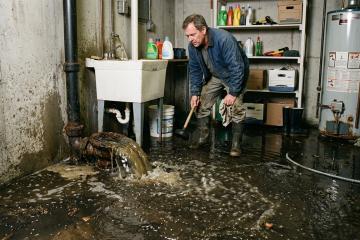
In my thirty years of responding to flooded basements, I've learned that water is patient, and it always wins. If your property doesn't have a plan for runoff, the water will make its own—usually right through your foundation.
Before you assume your French drain is dead and buried, run this quick check:
- Check downspouts: They must dump water at least 5 feet away from the house. The International Residential Code (IRC) mandates this for a reason [2].
- The 24-hour saturation test: Dig a hole 12 inches deep. If it's still holding water a day after the rain stops, your soil permeability (the ability of soil to soak up water) is the culprit [1].
- Basement "white powder": If you see a white, crusty residue called efflorescence on your walls, water is already pushing through the concrete. That's your final warning.
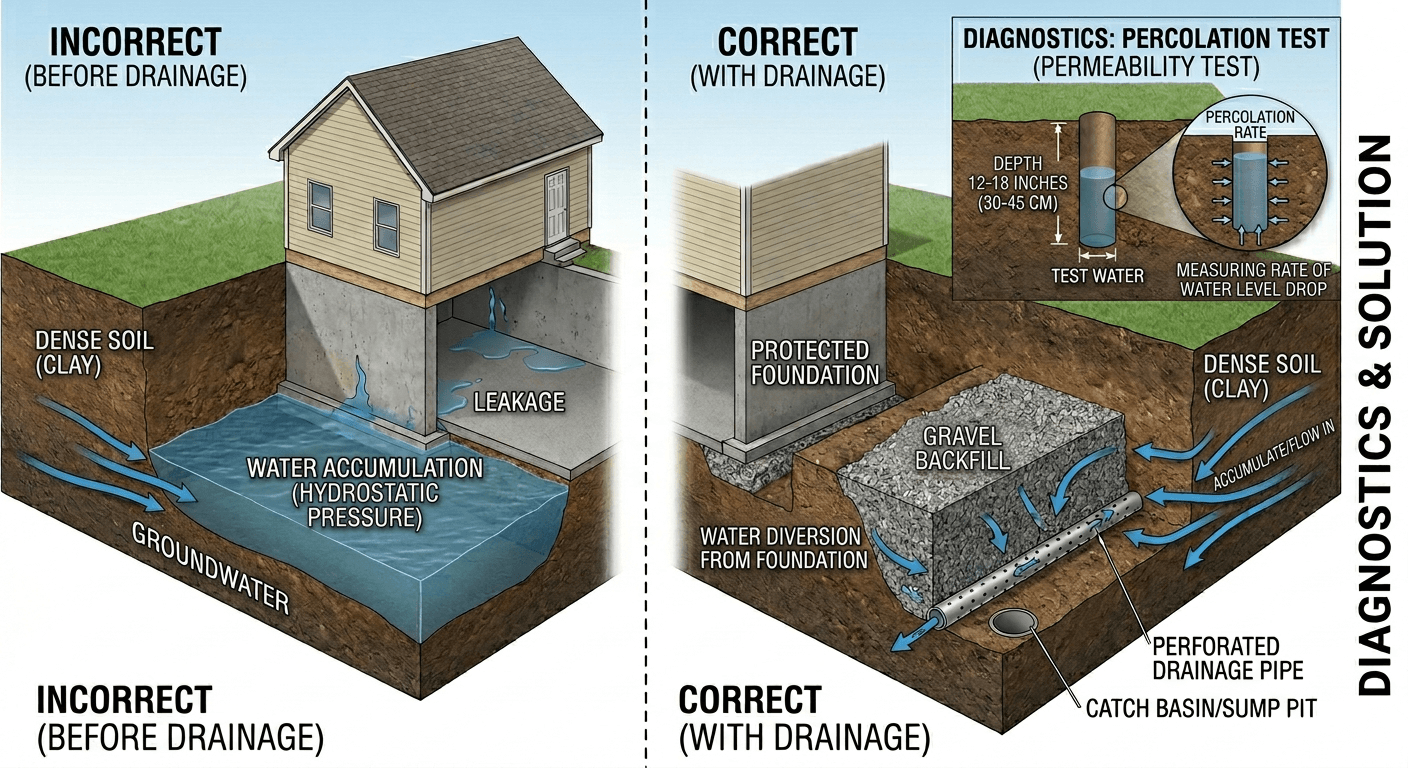
Physics at work: the French drain creates a "path of least resistance" to lead water away from your home.
How to Clean a French Drain: The Recovery Guide
If your yard is soggy again, your system is likely "blinded" by silt or choked by roots. Here is how I've handled these calls for decades:
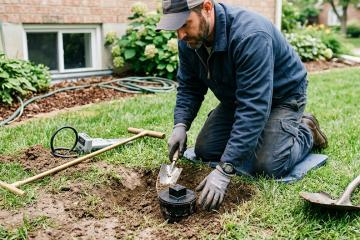
1. Locate the cleanout: Look for a white or green plastic cap in your yard. If it's missing, you'll have to find the "daylight" end where the pipe exits.
2. The garden hose flush: Shove a hose into the cleanout on full blast. If water gushes out the exit within a minute, you're in good shape. If it backs up toward you, the clog is solid.
3. Mechanical snaking: For heavy clogs or roots, rent an electric snake with a cutting head. Be careful: if you have cheap corrugated (ribbed) pipe, a snake can chew right through the thin plastic wall.
4. Hydro-jetting: This is the gold standard for pros. We use high-pressure water to blast out the fine silt that a snake misses. It's the only way to truly "reset" a dirty drain.
5. The flow test: Once clear, run water at the highest point. You want to see a steady, unobstructed stream at the exit.
French Drain Cleaning & Repair Cost Breakdown
| Service | DIY Cost | Pro Cost | Frequency |
|---|---|---|---|
| Basic Flushing | $0 (Your hose) | $5 - $10 / ft | Every 1-2 years |
| Hydro-jetting | $150 (Rental) | $400 - $800 | As needed |
| Spot Repair (10ft section) | $100 - $200 | $1,500 | Rare |
| Full Installation | $15 - $25 / ft | $50 - $100 / ft | Every 20-30 years |
*Note: expect to pay more if a crew has to hand-dig around old oak trees or navigate complex Miami-Dade terrain [5].*
Anatomy of an Everlasting Drain: Why Systems Fail
A French drain isn't magic; it's a relief valve for hydrostatic pressure (the literal weight of water pushing against your home). To build one that lasts 30 years instead of three, you need to avoid the "cheap" traps.
Pipe performance: smooth vs. corrugated
Most big-box stores push the black, flexible corrugated pipe. I won't touch the stuff. Those ridges trap sediment like a lint filter. At a 2% slope, a smooth-wall pipe (SDR-35) moves 157 gallons per minute. That same-sized corrugated pipe only moves 98 GPM [2]. In a Florida downpour, that 60-gallon difference decides whether your basement stays dry or becomes a swimming pool.
The filter is your insurance
You need non-woven geotextile fabric. Avoid the woven stuff that looks like a tarp. Non-woven fabric looks like felt and allows water to pass through quickly (10 liters per square meter per second) while stopping the tiny silt particles [3]. Without this, your expensive gravel will turn into a muddy mess within five years.
The golden rule of slope: 1 inch per 10 feet
Water doesn't run uphill. You need a consistent downward slope of at least 1% to 2% (about 1/8" of drop for every foot of pipe) [4]. If the pipe is level, the water sits, the silt settles, and the system dies.
DIY vs. Pro: When to Drop the Shovel
When to DIY:
If you're fixing a soggy spot in the middle of the lawn and the trench is shallow (under 2 feet), go for it. It's hard work, but low risk.
When to call a pro:
- Trench depth: If the trench is deeper than 4 feet, OSHA (Occupational Safety and Health Administration) requires shoring to prevent cave-ins [6]. I've seen trenches collapse in a blink; don't risk your life for a pipe.
- Foundation issues: If the drain is meant to save your foundation, the stakes are too high for "good enough."
- Legal hurdles: In Miami or Texas, you often need a permit for deep excavation or tie-ins to municipal storm drains [5].
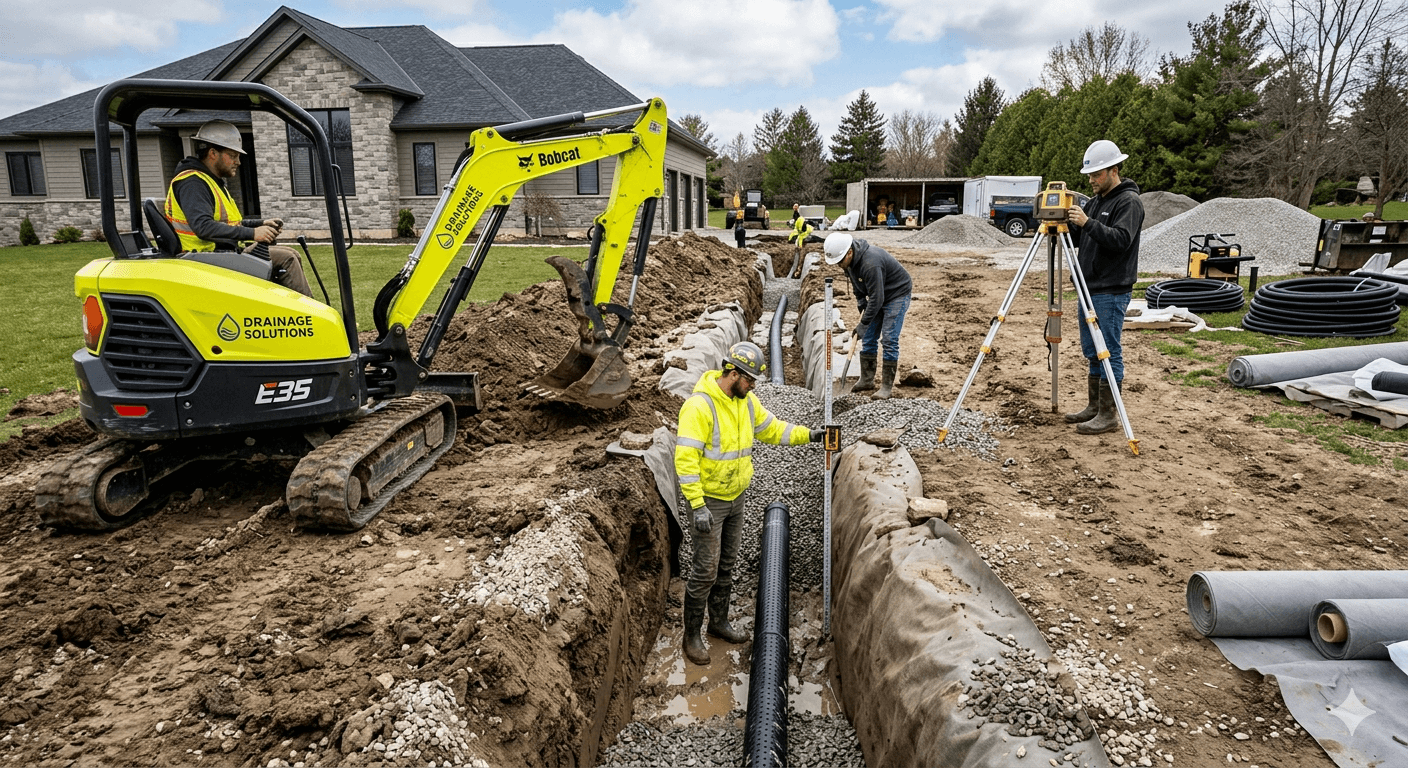
Professional crews use laser levels to ensure the slope is perfect—something that's hard to do with a string and a prayer.
Maintenance Checklist: Prevent the Next Clog
Don't wait for a flood to check your pipes. Follow this annual routine:
1. Inspect outlets: Ensure the "daylight" end isn't buried under mulch or blocked by a bird's nest.
2. Check for "iron ochre": If you see a rusty, orange slime, you have iron bacteria. You'll need professional-grade enzymatic cleaners, as harsh chemicals will damage the Florida ecosystem.
3. Flush the line: Run a high-volume hose through the cleanout for 10 minutes every spring.
4. Keep the cap on: A missing cleanout cap is an open invitation for rodents and debris to ruin your system.
48-Hour Action Plan
1. Call 811: This is non-negotiable. They need 48 to 72 hours to mark your gas and power lines [8].
2. Measure the drop: Use a line level or laser. If you don't have at least a 1% slope, the project is doomed before you start.
3. Buy the right stuff: Get non-woven fabric and smooth-wall SDR-35 pipe.
4. Assess the risk: If your basement is currently wet, don't wait for a DIY weekend. Call a professional for a site assessment today.

Peace of mind: a properly installed system keeps your home dry during the heaviest storms.
References
[1] Soil Drainage Testing - Iowa State Extension.
[2] Drainage Pipe Guide & Flow Rates - NDS.
[3] Geotextile Specifications - EuroDor / ONDUTISS.
[4] Drainage Slope Standards - PlumberCalc.
[5] Cost Analysis & Legal - Gidroprime / TopSadovnik.
[6] Trench Safety Standards - OSHA.
[7] Pipe Lifespan Comparison - TLC Incorporated.
[8] 811 State Specific Portals (NY, TX, OH, CO, PA).
![Sewer Line Cost [2026]: How Much to Install or Replace?](/assets/components/phpthumbof/cache/intro-how-much-does-sewer-line-replacement-cost.1ffc2261302128f1b93862c056de123d.jpg)

