Table of Contents
- The First 60 Seconds to Save Your Property
- The "15-Minute Test": Can You Fix It or Do You Need a Pro?
- Safe DIY: Clearing the Path Without Breaking the Pipes
- What Should It Cost? Avoiding the "Emergency" Markup
- Recovery: Insurance and The "Black Water" Protocol
- The "Anti-Clog" Checklist: Prevention is Cheaper Than Repair
- A Final Word from the Team
- References
The First 60 Seconds to Save Your Property
If you see water rising where it shouldn't, your house is under attack. Here is the immediate battle plan:
- Kill the Water: Stop all usage immediately. No flushing, no showers, no dishwashers. If it goes down a drain, it's coming back up on your floor.
- Shut Off the Main Valve: Find your main water shut-off (usually near the street or where the pipe enters the house) and turn it clockwise. You need to stop the "fuel" for the flood.
- Cut the Power: If water is creeping toward outlets or your electrical panel, flip the main breaker. Water and electricity are a lethal combination; we don't want you getting a shock while trying to save your belongings.
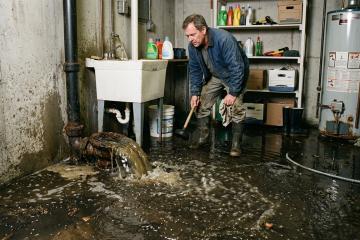
- Clear the Area: Get children and pets out of the room. This isn't just "dirty water"; it's raw sewage (black water) loaded with pathogens.
- Locate the Cleanout: Look for a white or black pipe with a cap sticking out of the ground near your foundation. This is your main access point. Most homes have this located about 1.2 meters (4 feet) from the foundation wall [2][3][4].
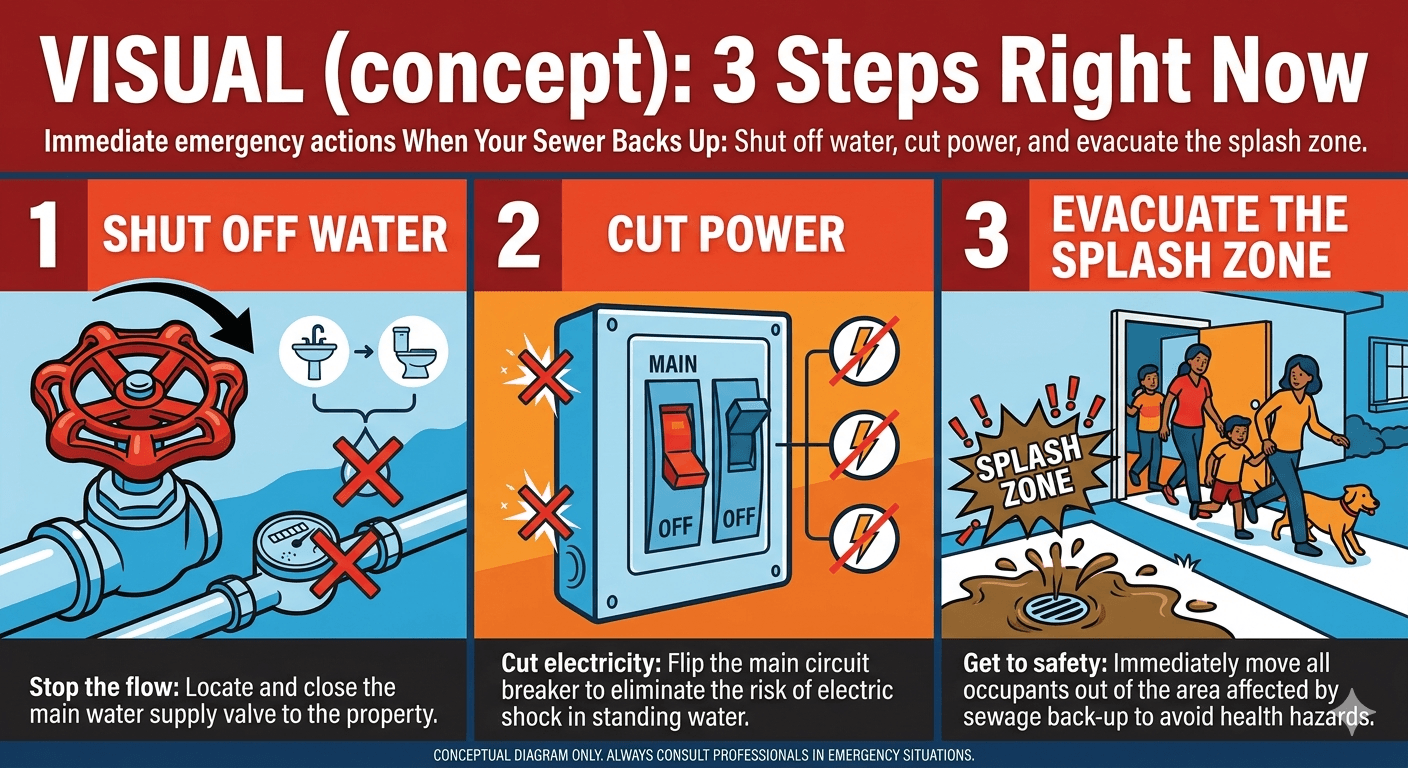
Immediate emergency actions: Shut off water, cut power, and evacuate the splash zone.
The "15-Minute Test": Can You Fix It or Do You Need a Pro?
We have seen homeowners waste hours plunging a main line blockage that a plunger couldn't touch. Use this diagnostic table to decide if you should keep working or pick up the phone.
| What You See | What's Actually Happening | Your Move |
|---|---|---|
| Only one sink or toilet is backed up. | Localized clog in the "P-trap" (the curved pipe under the fixture). | Grab the plunger or a small hand snake. |
| The toilet bubbles when the shower runs. | The main sewer line is choked. | Call a Licensed Plumber. |
| Water backs up even when you aren't using any water. | The city's main line has failed. | Call the Municipal Utility Department. |
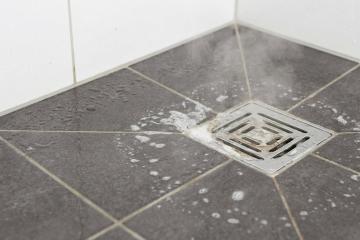
| Sewage is coming from the floor drain in the basement. | Severe main line blockage. | Drop the wrench and call a Pro. |
The "Red Line": When DIY Stops
Stop what you are doing and call a professional if:
- Multiple fixtures are backing up simultaneously.
- You see solid waste emerging from drains.
- The water level doesn't budge after 15 minutes of plunging.
- You smell "rotten eggs" (hydrogen sulfide gas) throughout the house.
A main line blockage is a heavy-duty job. Expect professional rates to land between $250 and $600 depending on the complexity of the job [1][2].
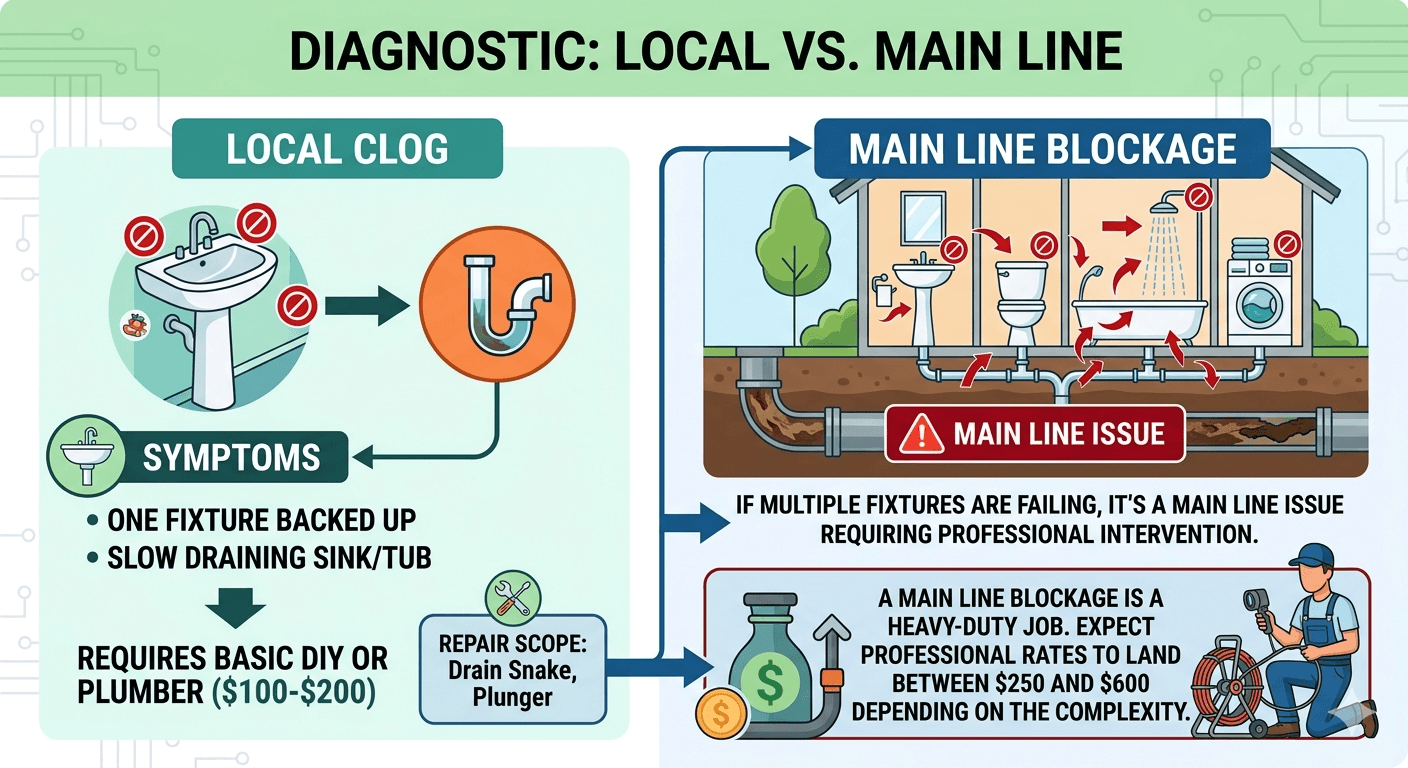
If multiple fixtures are failing, it's a main line issue requiring professional intervention ($250-$600).
Safe DIY: Clearing the Path Without Breaking the Pipes
If the clog is restricted to just one room, you can likely handle it. But we insist you do it the right way to avoid permanent damage.
Mechanical Power: Plungers and Snakes
- The Plunger: Use a flange plunger (the one with the extra rubber "sleeve" at the bottom) for toilets. You need a vacuum seal to be effective.
- The Snake (Auger): Feed the cable into the drain slowly. If you hit resistance, rotate—do not ram it. You're trying to hook the clog, not punch a hole through an old cast-iron pipe.
The "Drano" Trap: Why Chemicals Are a Bad Idea
We are going to be blunt: stop using caustic chemical cleaners in a total backup.
- It's Dangerous: If you can't clear the clog, that pipe is now full of acid. When the plumber arrives, that stuff can splash and cause severe chemical burns.
- It Eats Your House: These chemicals generate intense heat. That heat stresses PVC and corrodes metal pipes.
- It Doesn't Work: A bottle of liquid won't dissolve a thick tree root or a "flushable" wipe 20 feet down the line.
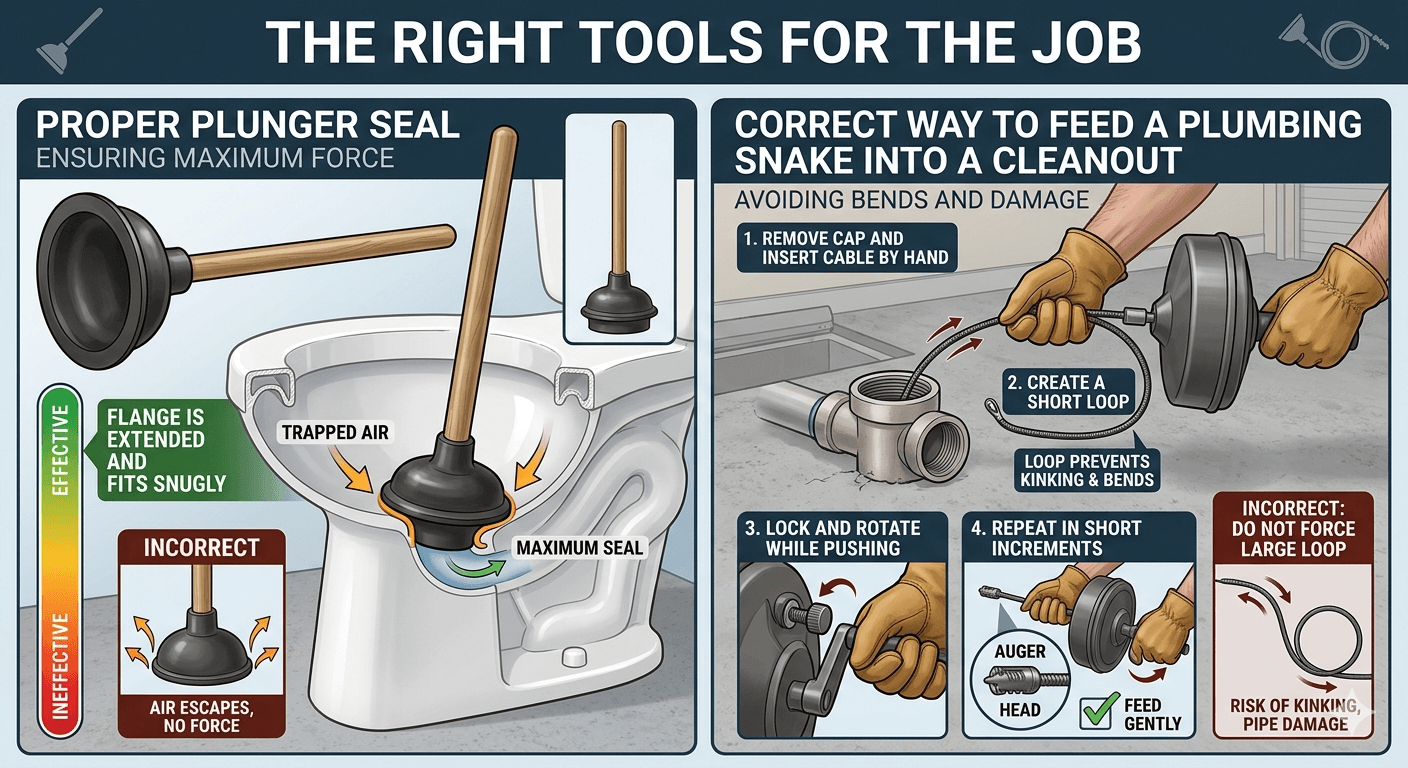
Proper plunger seal and the correct way to feed a plumbing snake into a cleanout.
What Should It Cost? Avoiding the "Emergency" Markup
Don't let a crisis make you a target for a scam. Based on our market data, here is the reality of professional pricing:
- Standard Snaking: $100 to $250 for basic jobs. If it's a deep main line issue, expect $250 to $600 [1][2].
- Hydro-jetting: This uses high-pressure water to scrub grease and cut through roots. It runs $350 to $900 [1][2].
- Camera Inspection: A fiber-optic camera shows the exact cause of the blockage. This usually costs $100 to $500 [1][2].
Pro Tip: In major hubs like Chicago, a simple toilet snake might be $125, but a main line disaster can hit $900 quickly [1]. Always ask for a written estimate before the work begins. Be wary of "pros" who demand cash upfront or refuse to explain their diagnostic process.
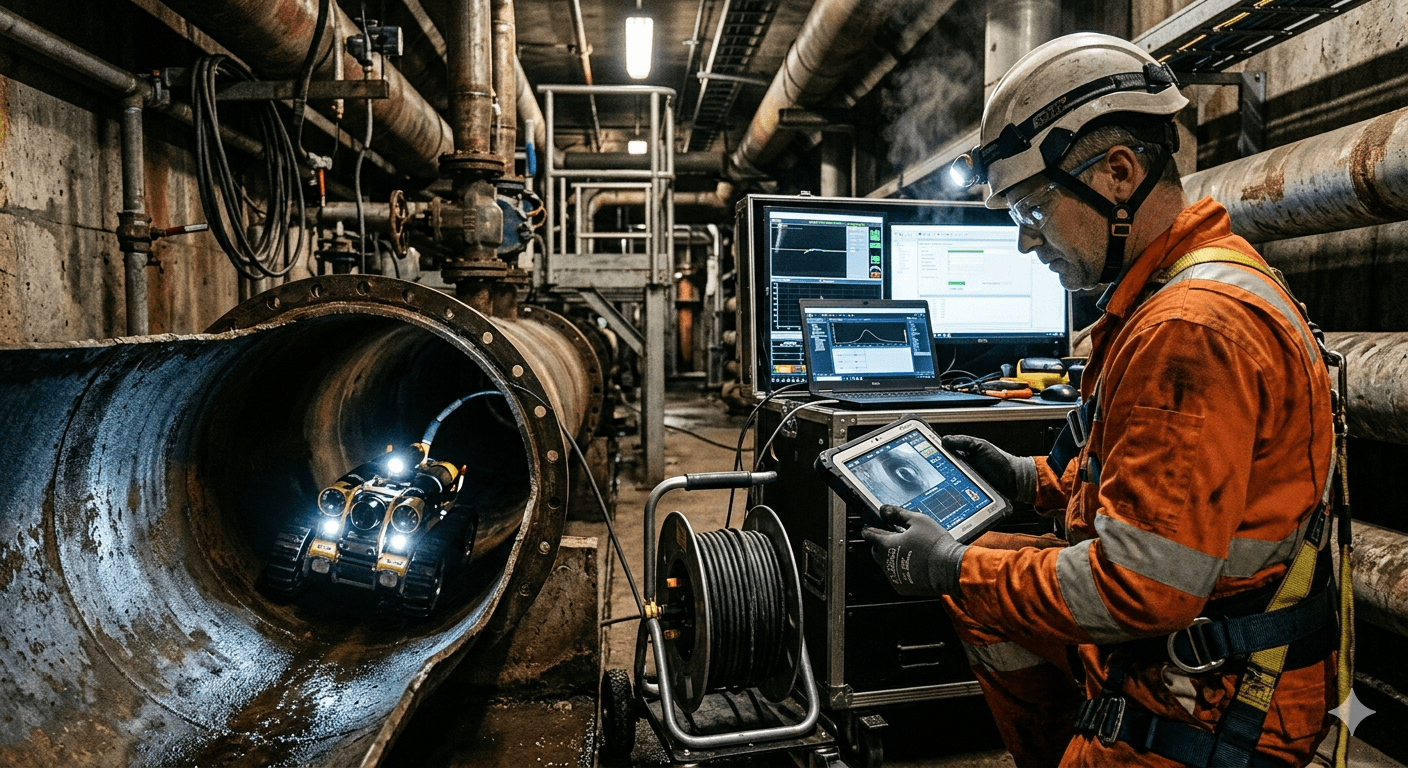
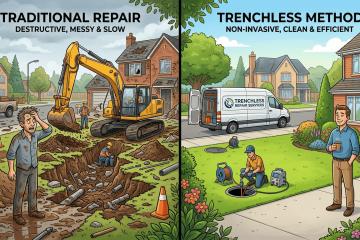
Why pros cost more: Hydro-jetting and camera inspections provide a permanent fix, not just a temporary hole.
Recovery: Insurance and The "Black Water" Protocol
Once the water stops rising, your focus shifts to documentation and safety. Sewage is classified as "Black Water"—it is highly unsanitary.
1. Document Everything First
Most standard policies don't cover sewer backups unless you have a specific "rider" (an amendment to your policy). Before you clean:
- Take high-resolution photos of the water level and every item touched by sewage.
- Call your insurance adjuster before hiring a restoration crew.
- Keep a log of every expense, from the plumber to equipment rentals.
2. The Cleanup Safety Rules
- Gear Up: Wear an N95 mask, heavy-duty gloves, and eye protection.
- The Bleach Rule: Use a 1:10 ratio (1 part bleach to 10 parts water) for all hard, non-porous surfaces [1].
- Toss the Porous Stuff: If sewage soaked into your carpet, padding, or drywall, it cannot be "cleaned." It must be removed and replaced.
- Emergency Water: If you suspect your drinking water was contaminated, use 1-2 drops of bleach per liter of water as a temporary disinfection measure [2].
The "Anti-Clog" Checklist: Prevention is Cheaper Than Repair
We want to make sure you never have to read this guide during an emergency again.
- No F.O.G.: Fats, Oils, and Grease belong in the trash. They turn into "fatbergs"—deposits as hard as concrete—inside your pipes.
- The Toilet is Not a Trash Can: Only human waste and toilet paper. "Flushable" wipes are the biggest lie in the industry; they do not break down and are a leading cause of backups.
- Install a Backwater Valve: This is a one-way gate that lets waste out but prevents city sewage from flowing back into your home. Installation typically costs between $600 and $1,500, but it saves thousands in flooring replacements.
- The Annual Inspection: Get a professional camera inspection every 12 months. It's the difference between a $150 maintenance check and a $5,000 emergency disaster [1][2].
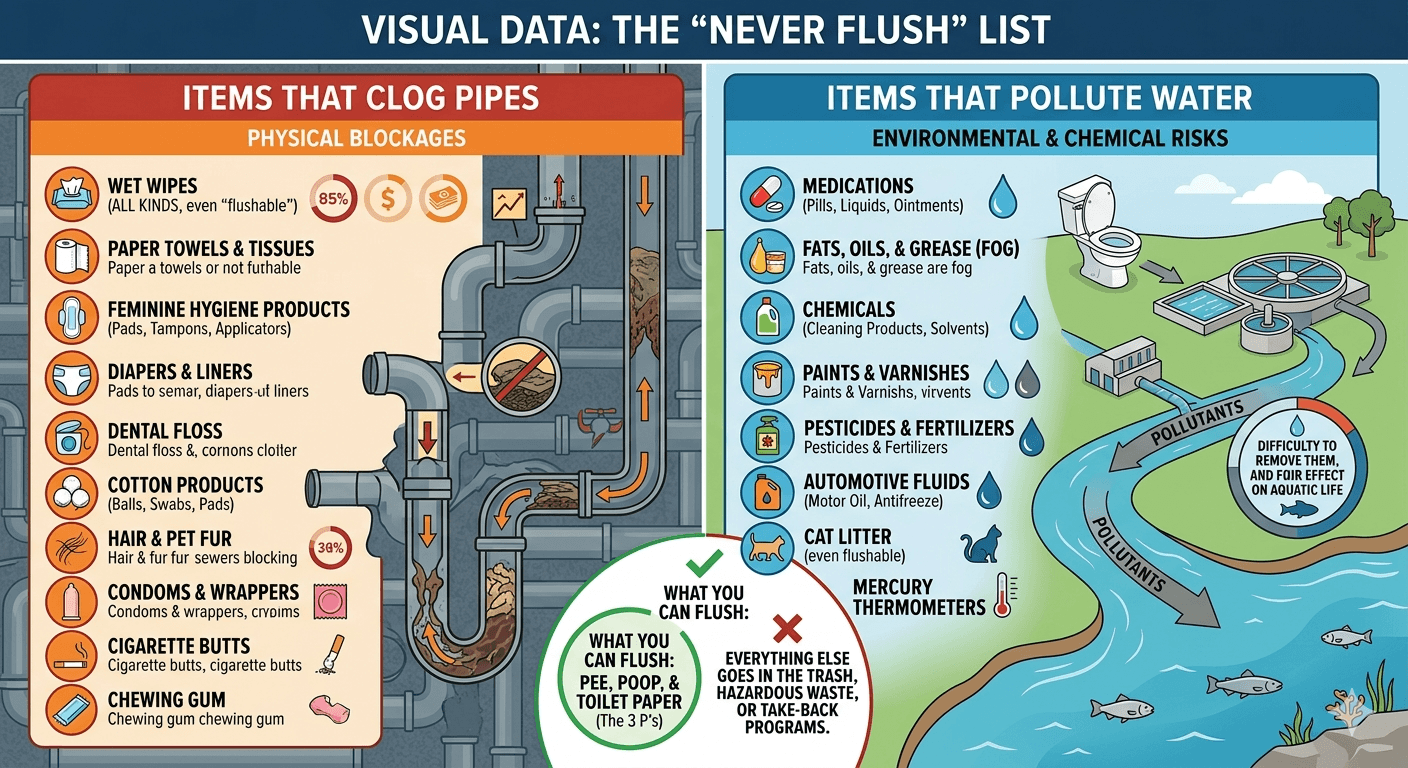
Wipes, grease, and trash are the primary causes of catastrophic backups.
A Final Word from the Team
Dealing with a sewer backup is one of the most stressful moments a homeowner can face. It feels like your sanctuary is being invaded. But remember: houses can be dried, pipes can be cleared, and floors can be replaced. By following the steps we've outlined, you've already done the hardest part—taking control of the situation. Stay safe, keep your boots on, and don't hesitate to call in the cavalry when the job gets bigger than a wrench can handle. We are all in this together.
References
[1] US Market Rates & Chicago Regional Pricing — https://swivl.tech
[2] Plumbing Service Cost Guides & Standards — https://hirelocal.services
[3] Sewer & Drain Maintenance Statistics — https://bazar.club
[4] Engineering Standards for Drainage Systems — https://aversa.by