Table of Contents
- The 15-Minute Emergency Game Plan
- Emergency Protocol: 3 Things to Do BEFORE Opening the Filter
- Why Won't the Water Drain? (The Diagnostic Cheat Sheet)
- Method 1: The "Clean Hands" Drain (Front-Loaders)
- Method 2: The Gravity Method (Top-Loaders & Older Models)
- Red Flags: When to Drop the Wrench
- Prevention: The "Never Again" Checklist
The 15-Minute Emergency Game Plan
If your drum is currently full of water, follow this immediate sequence to prevent property damage:
- Cut the Power: Unplug the machine immediately.
- Prep the Zone: Lay down every towel you own and find a shallow tray.
- Identify Your Machine: Front-loaders usually have a bottom hatch; top-loaders require the "Gravity Method."
- Drain: Follow the specific steps below for your model.
- Stop if: You smell burning plastic or see water leaking from *inside* the cabinet.
Emergency Protocol: 3 Things to Do BEFORE Opening the Filter
We've seen enough "amateur floods" to know that skipping these steps costs more than a plumber's Sunday rate.
- Kill the Power: Physically pull the plug from the outlet. If the floor is already wet, do not play hero—turn off the power at the breaker box first.
- Prepare for a Deluge: We aren't just looking at a minor leak. Depending on the model, there could be 8 to 32 gallons (30-120 liters) of water trapped inside [1]. Standard 5-7kg machines usually hold about 8-12 gallons. Have a mountain of towels ready.
- Clear the Zone: Keep kids and pets in another room. That water might be scalding hot if the cycle failed during a wash, and it certainly isn't sanitary.
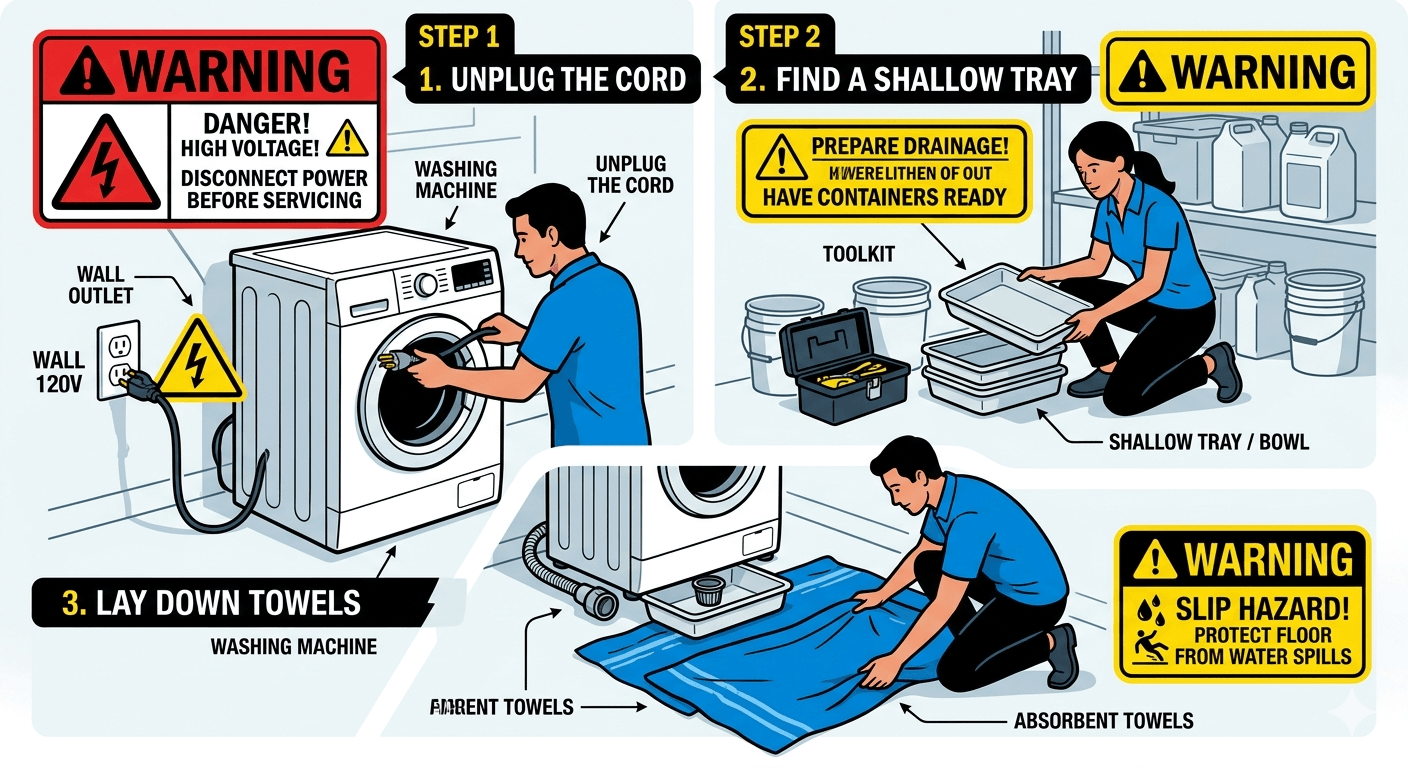
Your "Save the Floor" checklist: Don't skip the prep work.
Why Won't the Water Drain? (The Diagnostic Cheat Sheet)
The machine usually tries to tell us what's wrong through sounds or error codes. Use this table to decide if you need a wrench or a phone.
| What You See/Hear | The Likely Culprit | Error Code Examples | DIY or Pro? |
|---|---|---|---|
| Loud grinding/humming | Something is stuck in the pump | — | DIY (Clean it) |
| Dead silence | Pump motor or board is fried | Samsung 3E, LG LE [2] | Call a Pro |
| Error code on screen | Sensor detected a clog | LG: OE, Samsung: 5E, Bosch: E18 [2] | DIY First |
| Drains like molasses | Partial clog in hose/filter | — | DIY (Maintenance) |
Method 1: The "Clean Hands" Drain (Front-Loaders)
Most modern front-loading machines (Samsung, LG, Bosch) have a service panel at the bottom. This is the best bet for a controlled drain.
Tools you'll need: A flathead screwdriver, a shallow container (like a baking tray), and plenty of towels.
- Pop the Hatch: Use your screwdriver to gently pry open the service panel at the bottom corner.
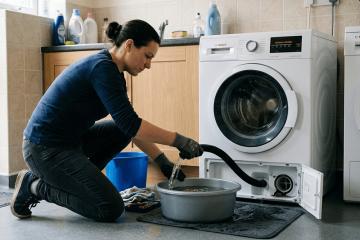
- The Emergency Tube: Look for a small rubber hose next to the large round filter cap. Pull it out, place it over your tray, and remove the plug.
- Patience is Key: Let the water flow. It might take several "tray loads" to empty the drum completely. Once the flow stops, secure the plug back into the tube.
- Unscrew the Filter: Now that the bulk of the water is gone, turn the large filter cap counter-clockwise.
- Evict the Clog: Reach in and pull out any coins, hairpins, or lint.
- Check the Impeller: Reach your finger into the hole toward the back. You'll feel a small plastic fan (the impeller). Give it a flick; it should spin freely [3]. If it's jammed, the pump cannot function.
- Seal it Tight: Screw the filter back in. Ensure it isn't cross-threaded, or we'll have a leak on the next cycle.
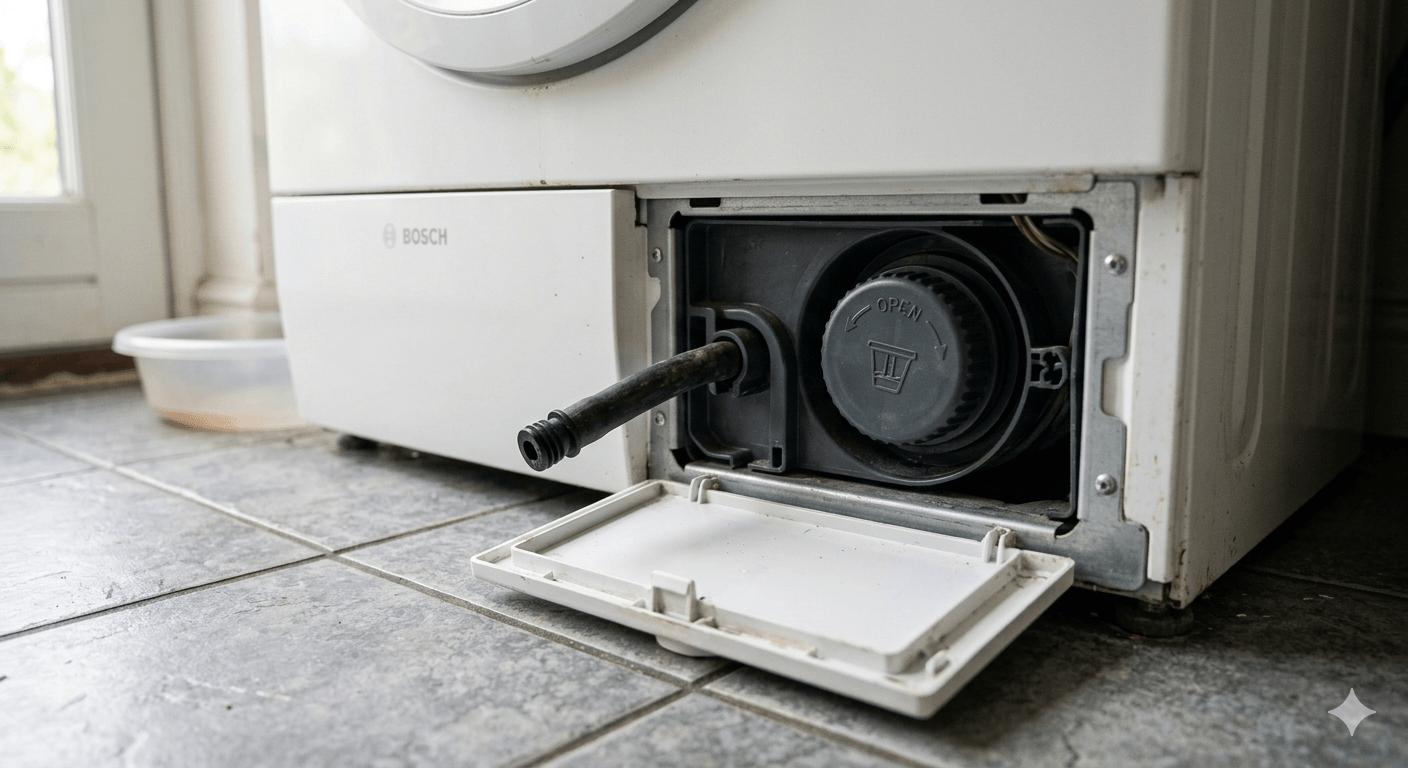
The "Secret" drain: The emergency tube is your best friend for avoiding a mess.
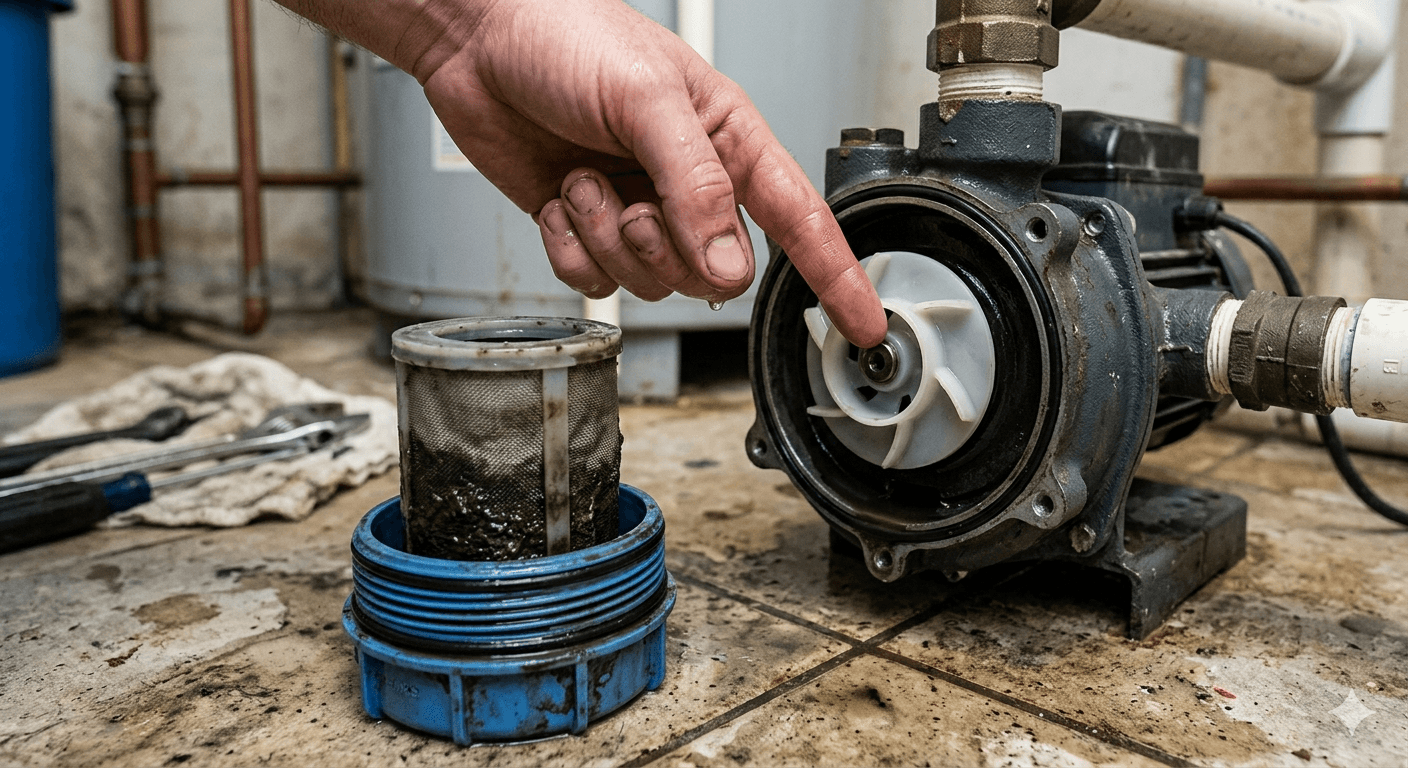
The Impeller Test: If this little fan doesn't spin, your pump is dead weight.
Method 2: The Gravity Method (Top-Loaders & Older Models)
If there is no front filter, we let physics do the heavy lifting.
- Drop the Hose: Pull the corrugated drain hose out of the wall standpipe.
- Get Low: Lower the hose as close to the floor as possible, aiming it into a large bucket.
- The Siphon Effect: As long as the end of the hose is lower than the water level in the drum, gravity will pull the water out for you.
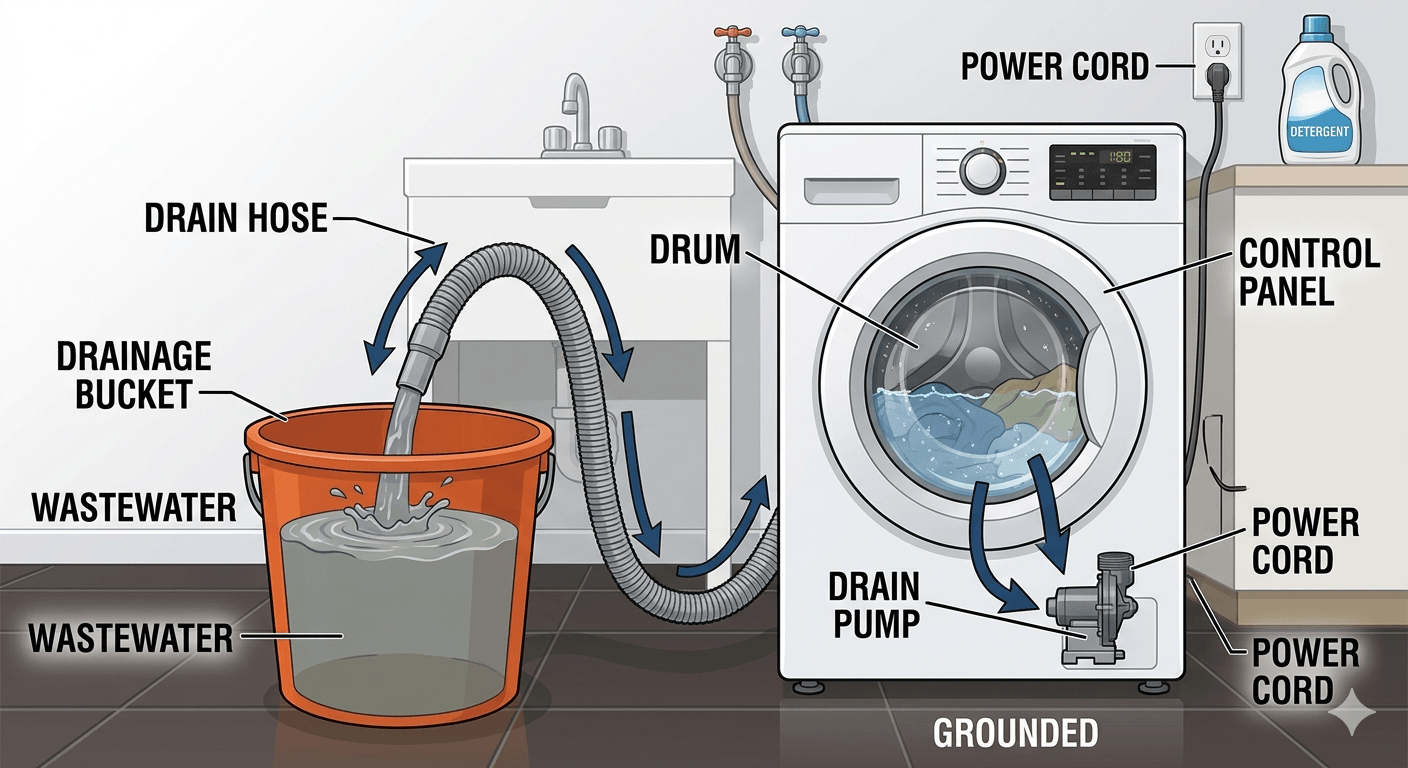
Gravity at work: Keep the hose low to keep the water moving.
Red Flags: When to Drop the Wrench
We are all for DIY, but some "simple fixes" can lead to $5,000 floor replacements or electrical fires. Stop immediately and call a professional if:
- You smell ozone or burning plastic: This indicates an electrical short.
- The machine is sparking: This is an immediate fire hazard.
- Internal Leaks: Water is leaking from *inside* the cabinet, not just the filter area. This usually means an internal seal or hose has burst [5].
- Fatal Error Codes: Codes like Bosch F04 (Aqua Control/Leak), Haier E:35, or Siemens F67 (Board failure) indicate hardware failures that DIY cleaning won't fix [2, 3].
Think you need a new pump? Watch this before you start ordering parts.
Prevention: The "Never Again" Checklist
To keep your laundry room dry and your pump happy, we recommend this routine:
- Monthly Filter Checks: Clean the drain filter every 1 to 3 months [3].
- Pocket Sweep: A single dime is a pump-killer. Check every pocket.
- Watch the Suds: Using too much detergent creates "oversuds" that trick sensors and cause drainage errors.
- Hot Cycles: Run a hot "clean cycle" once a month to dissolve the sludge mentioned earlier.

![Sewer Line Cost [2026]: How Much to Install or Replace?](/assets/components/phpthumbof/cache/intro-how-much-does-sewer-line-replacement-cost.1ffc2261302128f1b93862c056de123d.jpg)