Listen, our team has been plumbing in Miami for over 20 years, and we’ve seen it all—from "flushable" wipes that definitely weren't flushable to toys wedged so deep in a P-trap (the S-shaped pipe under the bowl) they required a sledgehammer. If the water level is rising and there isn't a plunger in the house, don't panic. Take a breath. We’re going to fix this before the bathroom turns into a swamp.
Table of Contents
STOP! Do This First to Save Your Floors
Before trying any "hacks," the water must be killed. If that bowl overflows, it isn't just a mess; it's a recipe for mold and warped subfloors—a nightmare in our South Florida humidity.
1. Reach behind the toilet: Find the silver handle (the shut-off valve) near the floor.
2. Crank it clockwise: Turn it until it stops. If it's stuck—which happens often with our salty air—don't force it too hard or the stem might snap.
3. The "Manual Kill": If the valve won't budge, pop the tank lid off. Reach in and push the rubber flapper (the seal at the bottom) down hard. Then, lift the float arm (the ball or tower) to stop the tank from refilling.
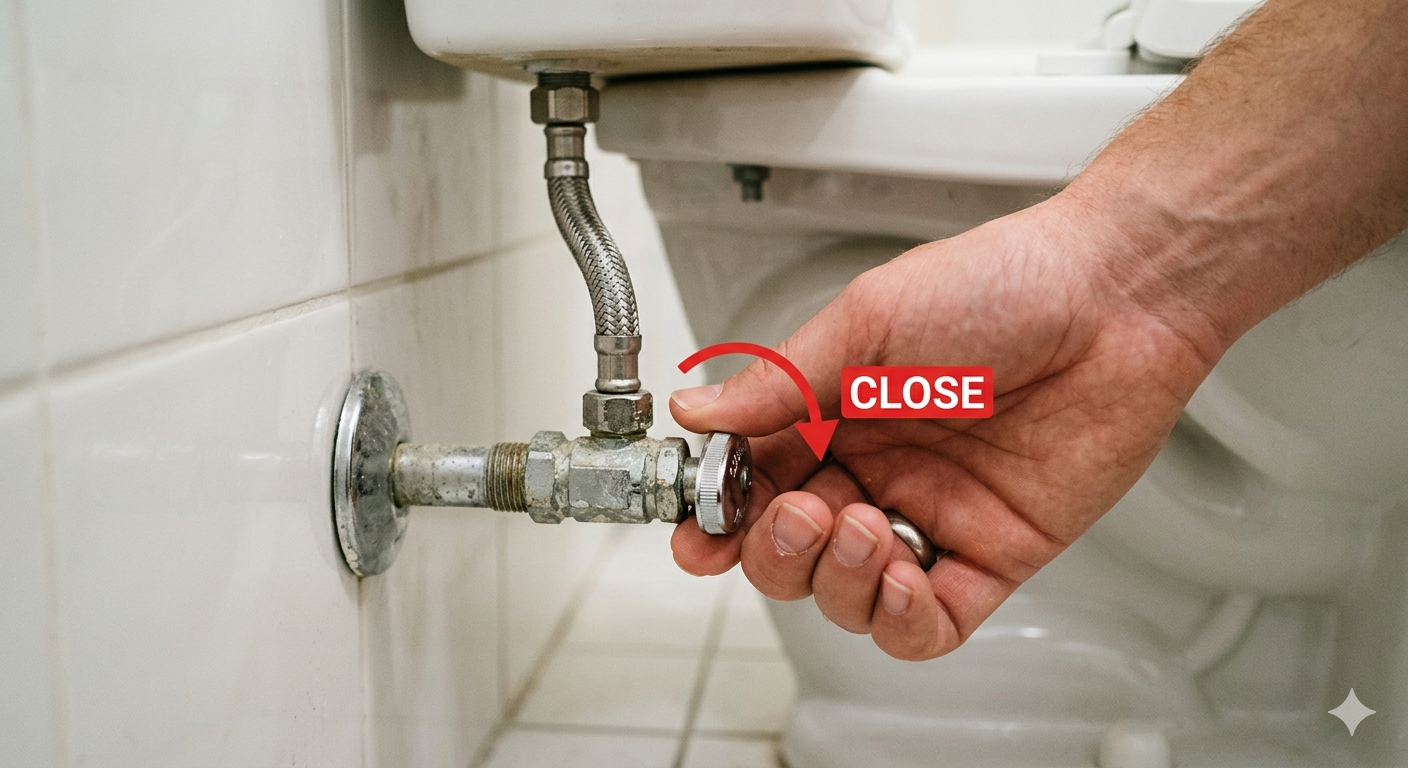
Step 0: Kill the water supply immediately if the level is rising.
The 15-Minute Rule: DIY or Call a Pro?
In our experience, you have a 15-minute window to solve this yourself. If these methods don't work within two or three attempts, continuing to poke at the pipes risks permanent damage to the porcelain or the wax ring seal.
Check the symptoms:
- Water drains slowly: Likely a "soft" organic clog. High chance of DIY success.
- Water is totally stagnant: Possible "hard" object (toy, wipes). Be careful with pressure.
- Gurgling in the shower/sink: This is a main line clog. Stop immediately and call a licensed professional.
Why the Pipe is Blocked
A toilet isn't just a hole; it's a precision-engineered siphon. It uses an S-shaped "trap" to keep sewer gases out of the home [1]. Clogs usually fall into two camps:
- The Soft Stuff: Excessive toilet paper or organic waste. These can be lubricated or dissolved.
- The Hard Stuff: Wet wipes, feminine products, or a child's toy. These are mechanical blocks that must be moved or pulled back.
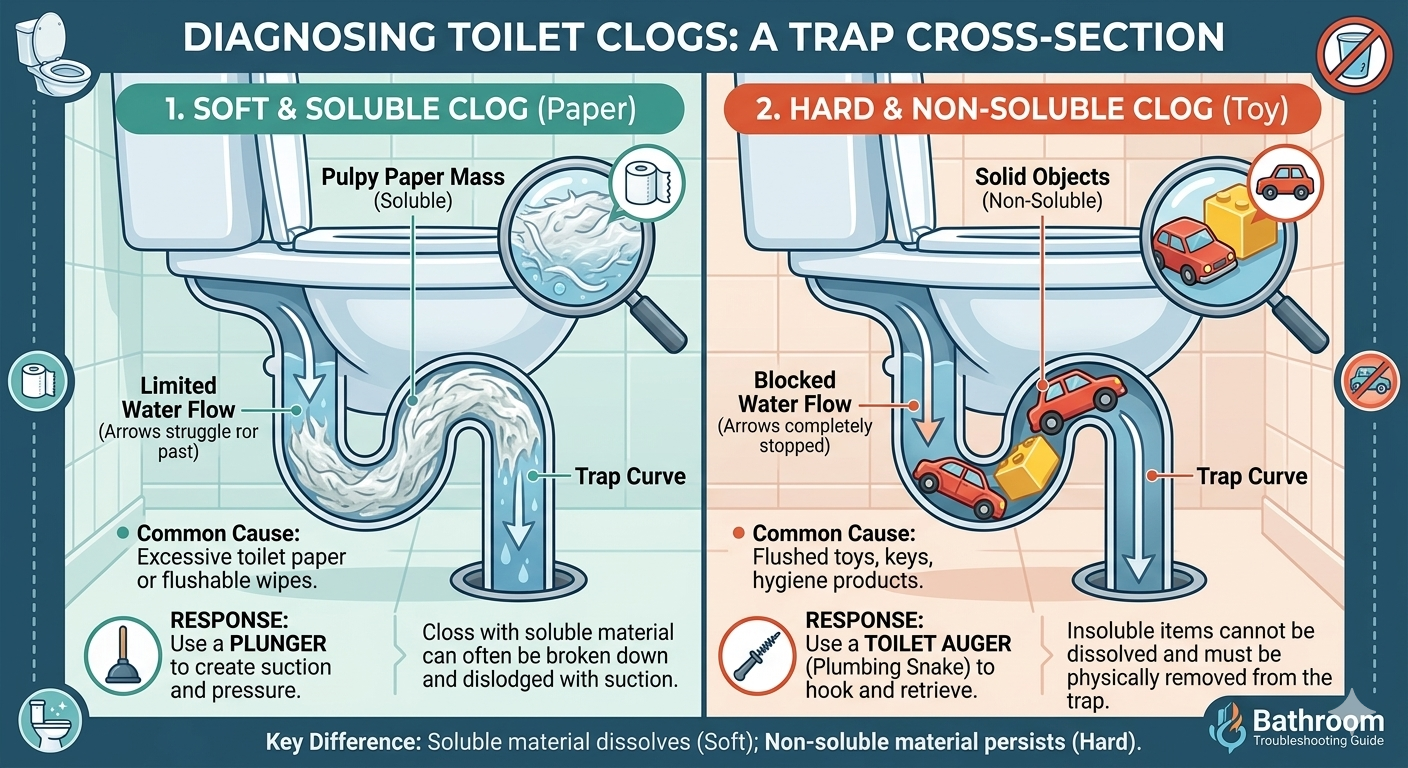
Knowing your enemy: Is it a "meltable" organic clog or a solid object?
7 Pro-Tested Methods to Unclog Without a Plunger
Method #1: The "Slippery Slope" (Dish Soap + Hot Water)
This is the gold standard for organic clogs. We are turning the trap into a slide.
1. The Lube: Squirt about 1/2 cup (120 ml) of liquid dish soap into the bowl [2]. Give it 10 minutes to sink.
2. The Heat: Get a gallon of hot water. CRITICAL: Do NOT use boiling water. We have seen too many cracked porcelain bowls because someone poured 212°F water into a room-temperature toilet [3]. Use "hot tap" water.
3. The Drop: Pour it from waist height. The weight combined with the soap usually pushes the clog through.
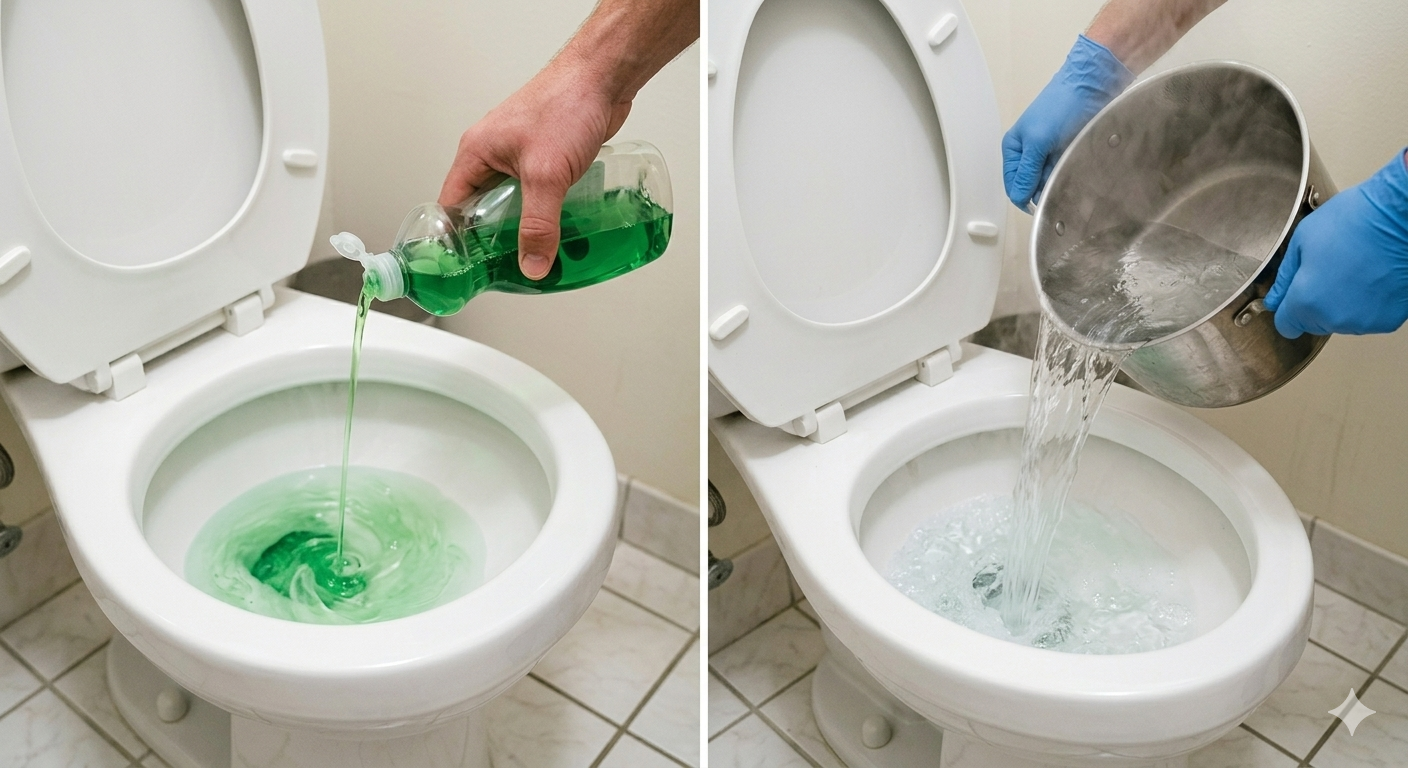
Dish soap acts as a lubricant, helping the clog slide through the narrow 2-inch trapway.
Method #2: The "Volcano" (Baking Soda & Vinegar)
The CO2 reaction creates fizzing pressure that breaks up paper jams. It is 100% safe for PVC pipes [7].
1. Dump 1 cup of baking soda in.
2. Slowly pour in 1 cup of white vinegar.
3. Let it fizz for 30 minutes, then try a test flush while keeping a hand on the shut-off valve.
Method #3: The DIY Piston (The Plastic Bottle)
1. Grab a 2-liter soda bottle and ensure the cap is tight.
2. Cut the bottom off the bottle cleanly.
3. Shove the cut end into the drain hole and pump it up and down vigorously to create a hydraulic shock.
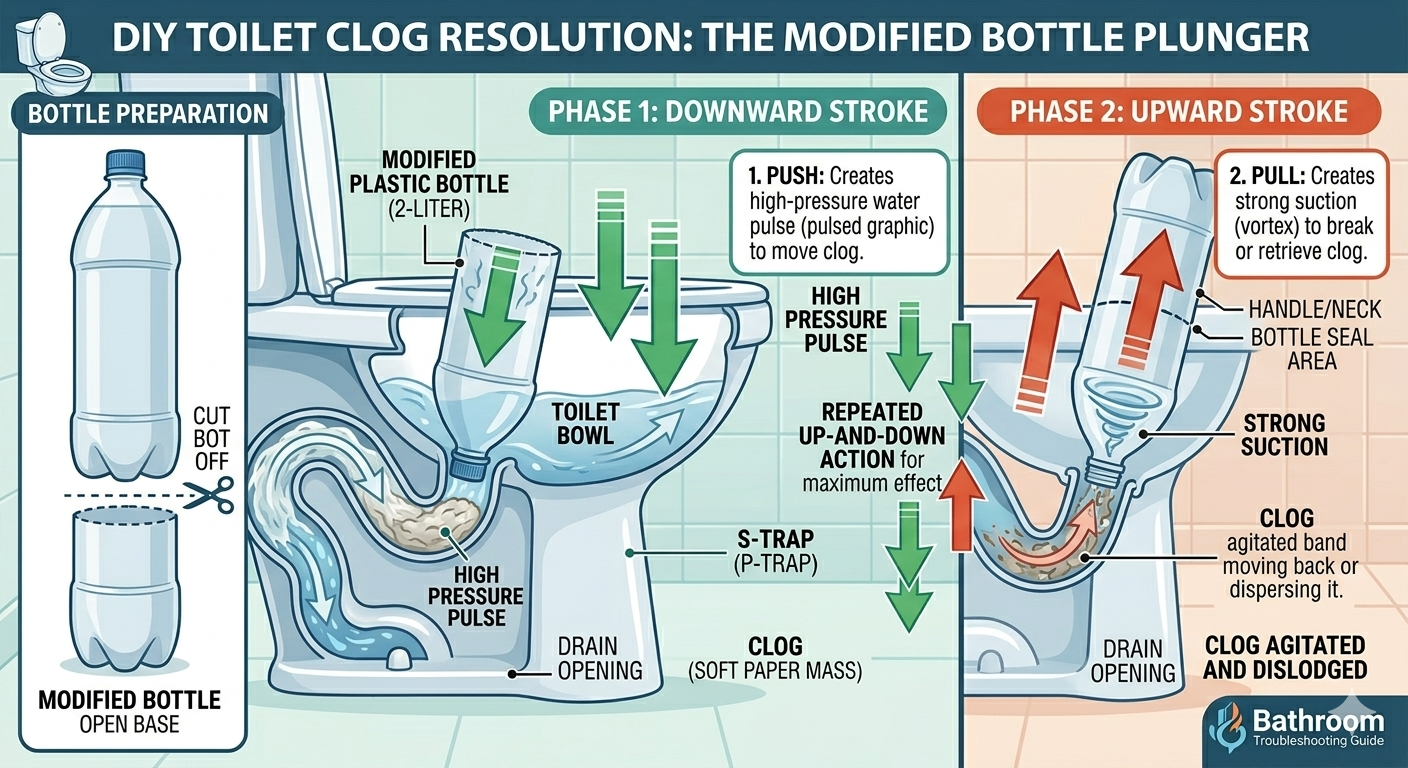
The Bottle Hack: A zero-cost way to create a hydraulic shock.
Method #4: The Wire Hanger "Snake"
Best for solid objects.
1. Straighten a wire coat hanger.
2. Pro Tip: Wrap the end in a rag and duct tape it. Otherwise, the porcelain enamel will be permanently scratched.
3. Gently poke and twist to hook the object and pull it back.
Method #5: The Wet/Dry Vacuum (The Heavy Hitter)
If there is a hard object like a toy, don't push it—suck it out.
1. Empty the water from the bowl (use a small cup).
2. Place the vacuum hose in the drain and seal the gap with a wet towel.
3. Turn it on. This is often more effective than any plunger for retrieving solid items.
Method #6: The "Enzyme Melt"
If time isn't an issue, use an enzyme-based cleaner. These eat organic material without damaging old Miami plumbing. Avoid caustic chemical "drain openers"—they generate heat that can damage pipes or seals.
Method #7: The Toilet Brush "Plunger"
If no bottle is available, wrap a plastic bag tightly around a toilet brush head. Use it exactly like a plunger. It won't create a perfect seal, but it often provides enough displacement to nudge a soft clog.
Efficiency Comparison
| Method | Effectiveness | Difficulty | Risk | Time |
|---|---|---|---|---|
| Soap + Water | High (Organic) | Low | Zero | 15 min |
| Soda + Vinegar | Medium | Low | Low | 30 min |
| Plastic Bottle | High | Medium | Low | 5 min |
| Wet/Dry Vac | Maximum (Hard) | High | Low | 10 min |
| Wire Hanger | Maximum | High | Medium | 10 min |
The "Red Line": When to Put Down the Wrench
Part of being a pro is knowing when you're beat. Call us if:
- Water backs up into the shower or sink.
- You smell raw sewage.
- The clog won't budge after three DIY attempts.
A standard plumbing visit in 2024-2026 runs between $100 and $150 [4][9]. Compare that to the $2,000+ spent replacing warped flooring or a cracked bowl. Sometimes, the professional is the "budget" option.
How to Never Have This Problem Again
- The "No-Flush" Rule: If it isn't toilet paper, it doesn't go in. Even "flushable" wipes take weeks to break down [6].
- Fight the Scale: Miami has hard water. Calcium builds up like cholesterol in the "veins" of the house. Use a descaler every few months [5].
- Monthly Maintenance: Use an enzyme-based cleaner once a month to keep the lines clear.
We know that a clogged toilet feels like a crisis when you're standing in an inch of water, but remember: most of these fixes are within your reach. Our Miami community has enough to worry about with hurricane seasons and humidity—don't let a stubborn pipe ruin your week. If you've tried these steps and the water still won't move, don't risk your home's foundation. We are here to help, and sometimes the smartest tool in the box is knowing when to call in the crew. Stay dry, Miami!
References
[1] Toilet Trapway Sizes and Standards (ANSI/TOTO/Kohler) — https://toiletkingva.com
[2] DIY Unclogging: Dish Soap Method Ratios — https://theinushome.com
[3] Thermal Shock in Vitreous China: Cracking Risks — https://terrylove.com/forums
[4] Plumbing Labor Costs 2024-2026 (US Market) — https://www.consumeraffairs.com
[5] Maintenance Intervals for Hard Water Systems — https://www.homedepot.com/services
[6] Biodegradability of Toilet Paper in Septic Systems — https://www.mrrooter.com
[7] PVC Chemical Resistance Chart (A1/A2 Ratings) — https://www.calpaclab.com
[8] Consumer Survey: Clogging Frequency Statistics — https://www.kohler.com
[9] UK Plumbing Call-out Fees and Emergency Rates — https://www.checkatrade.com